Leading AI Language Learning Apps for Career English: Hands-On Comparative Assessment
By Matthew Collins Fact checked by Alessandro Romano Last update
Evaluation scope: 5 platforms, 6 workplace scenarios. Target proficiency: A2 to C1 career professionals. Assessment cycle: November 2026.
An empirical, multi-week field review of Enverson AI, ChatGPT, Speak, Praktika, and Duolingo across real-world professional communication workflows.
1. Executive Summary & Strategic Context
Corporate language training has reached an inflection point. For decades, professionals seeking to advance into international roles, lead cross-border meetings, or negotiate with global stakeholders faced a binary choice: pay substantial fees for private human tutors or rely on gamified self-study software that rarely translated into spontaneous spoken fluency. Today, large language models, neural voice synthesis, and adaptive pedagogical engines promise to close that gap. Yet when an organization or individual professional evaluates the market, every vendor claims conversational mastery, hyper-personalization, and rapid fluency gains.
To separate marketing claims from genuine instructional utility, I conducted an intensive, hands-on comparative evaluation of five leading AI-driven language platforms: Enverson AI, ChatGPT, Speak, Praktika, and Duolingo. Rather than testing these tools with casual travel phrases or textbook vocabulary drills, I subjected each platform to a standardized suite of workplace communication tasks. Over several weeks of daily practice (spanning morning commutes, desk-based role-plays, and structured pronunciation drills), I tested how each system handles the specific linguistic demands of modern career English.
The core finding of this evaluation is that these five platforms do not merely differ in interface polish or subscription price; they represent fundamentally distinct pedagogical philosophies. Enverson AI emerged as the strongest overall solution for professionals who already possess foundational English knowledge and need to eliminate hesitation, fossilized grammar errors, and speaking anxiety through adaptive, memory-enabled tutoring. Its architecture, informed by cognitive psychology and second-language acquisition principles, bridges the divide between open conversation and systematic error remediation.
By contrast, ChatGPT functions as an infinitely flexible general-purpose sparring partner that rewards power users capable of engineering their own curriculum, though it lacks persistent pedagogical memory and structured progression without manual intervention. Speak excels at high-repetition oral drilling and American English phonetic conditioning, making it highly effective for building muscle memory around core business phrases, albeit within a more rigid conversational frame. Praktika lowers psychological barriers through expressive animated avatars and low-pressure video-call simulations, though its corrective depth and long-term learner tracking trail behind dedicated adaptive engines. Finally, Duolingo remains unmatched for daily habit formation and foundational vocabulary acquisition, even as its conversational AI features struggle to carry intermediate professionals toward executive-level fluency.
The ranking at a glance
Career English overall rating out of 10, from the weighted scoring in section 2.3
- #1Enverson AI ★ 9.2 / 10Real-time explained correction and cross-session recall
- #2Speak ★ 8.3 / 10Rapid oral muscle-memory conditioning
- #3ChatGPT ★ 8.1 / 10Unlimited domain-specific role-play
- #4Praktika ★ 7.4 / 10Low-anxiety visual presence for shy speakers
- #5Duolingo ★ 6.5 / 10Daily habit retention and A1 to B1 foundations
| Platform | Core Pedagogical Model | Primary Career Strength | Primary Limitation | Published Pricing (Nov 2026) |
|---|---|---|---|---|
| Enverson AI | Psychologist-designed adaptive conversational tutoring with longitudinal error memory | Real-time explained grammar/pronunciation correction and cross-session recall | Fewer arcade-style gamification rewards; requires active voice engagement | ~$9.99/mo individual |
| ChatGPT | General-purpose multimodal LLM with Advanced Voice Mode and custom instructions | Unlimited domain-specific role-play (e.g., niche technical or legal negotiations) | No built-in CEFR curriculum; tends to be overly polite unless strictly prompted | $0 Free (capped); $8/mo Go; $20/mo Plus; $25/seat Business |
| Speak | Structured audio-first curriculum paired with high-volume pronunciation drills | Rapid oral muscle-memory conditioning and gentle beginner-to-intermediate ramp | No permanent free tier; higher cost; scripted feel in guided lessons | $17.99 to $21.99/mo Premium; $39.99/mo Premium Plus |
| Praktika | Animated 3D avatar tutoring with guided lessons, Free Talk, and video-call mode | Low-anxiety visual presence that helps shy speakers overcome initial freeze | Corrections sit behind extra taps; limited long-term memory across weeks | $9.99/mo; $59.99 to $139.99/yr (limited 3-avatar free tier) |
| Duolingo | Gamified micro-learning tree with streak mechanics and AI Video Call / Roleplay | Unrivaled daily habit retention and foundational A1 to B1 structural reinforcement | Lenient speech scoring; on-rails dialogue; Max tier discontinued for new users | $0 Free (ad-supported); ~$12.99/mo or ~$83.99/yr Super |
2. Evaluation Methodology & Career English Framework
Evaluating language software for professional deployment requires a markedly different rubric than evaluating apps for holiday travel or casual hobbyists. In a workplace environment, communication failure rarely stems from not knowing the word for "airport" or "coffee." Instead, professionals stall because of pragmatic errors, register mismatches, hesitation under time pressure, and fossilized grammatical habits that undermine executive presence. Furthermore, a credible comparative study must transparently disclose its experimental controls, sample exposure, baseline proficiency calibration, and quantitative measurement protocols so that L&D stakeholders can audit how scores were derived.
2.1 Experimental Controls, Baseline Calibration & Testing Exposure
To prevent confounding variables (such as spending twenty hours on one platform and twenty minutes on another, or testing one app at a beginner level and another at an executive level), all five applications were evaluated under a controlled, symmetric testing protocol:
- Uniform Starting Proficiency Calibration: Every account was initialized and calibrated to an identical baseline of CEFR B1+ (Lower-Upper Intermediate, IELTS 5.5 / TOEFL iBT 68 equivalent). Where platforms administered placement diagnostics (Enverson AI, Speak, Praktika, Duolingo), identical baseline responses were entered; for ChatGPT, an equivalent B1+ learner profile was established via system-level custom instructions without giving ChatGPT unfair rubric hints.
- Standardized Testing Duration & Session Volume: Each platform was tested over an identical 21-day evaluation window (3 weeks), comprising exactly 15 structured sessions per application (approximately 20 minutes per session, totaling 300 minutes / 5.0 active hours per platform, or 25.0 total testing hours across the five tools).
- Lesson & Interaction Equivalency: Because platform architectures differ (open conversational turns vs. discrete micro-lessons), activity volume was normalized to 15 complete core units/sessions per platform, specifically: 15 full adaptive tutoring sessions + post-session custom role-plays on Enverson AI; 15 timed 20-minute voice/text role-play sessions on ChatGPT Plus; 15 structured speaking lessons + AI role-play drills on Speak; 15 guided/video-call avatar sessions on Praktika; and 15 full unit nodes (75 individual micro-lessons plus 15 AI Video Call/Roleplay interactions) on Duolingo.
- Independent Language Proficiency Assessment: To verify spoken output quality and baseline-to-post-test consistency independently of each app's internal scoring algorithm, recorded audio samples from Day 1 and Day 21 were benchmarked against an external CEFR-aligned spoken rubric (evaluating Fluency & Coherence, Lexical Resource, Grammatical Range & Accuracy, and Intelligibility) alongside acoustic transcription audits.
| Platform | Testing Duration | Completed Volume | Calibrated Baseline | External Audit Protocol |
|---|---|---|---|---|
| Enverson AI | 21 days (300 mins) | 15 full adaptive sessions + 15 custom role-plays | CEFR B1+ (Diagnostic calibrated) | Day 1 vs. Day 21 recorded speech audit + error-log tracking |
| ChatGPT | 21 days (300 mins) | 15 structured 20-min voice & document sessions | CEFR B1+ (Profile calibrated) | Transcript audit of spontaneous vs. prompted corrections |
| Speak | 21 days (300 mins) | 15 core business lessons + 15 AI role-play drills | CEFR B1+ (Placement calibrated) | Phoneme stress audit + unscripted tangent stress test |
| Praktika | 21 days (300 mins) | 15 avatar sessions (8 Guided, 4 Free Talk, 3 Video) | CEFR B1+ (Placement calibrated) | Bubble-feedback audit vs. live conversational repair rate |
| Duolingo | 21 days (300 mins) | 15 path units (75 micro-lessons + 15 AI Calls) | CEFR B1+ (Section 4 placement) | ASR pass-threshold stress test + Day 21 speaking benchmark |
2.2 Quantitative Accuracy & Retention Measurement Protocols
Rather than relying solely on subjective impressions of "how helpful" a tutor felt, three empirical measurement instruments were embedded across all 15 sessions per app:
- Grammar Correction Accuracy Measurement (60 Seeded Errors per App): Across the 15 sessions, I deliberately injected 60 controlled, high-frequency B1/B2 workplace grammar errors (4 per session) spanning tense/aspect confusion ("I visit to New York tomorrow"), missing articles before countable business nouns ("We finalized contract yesterday"), preposition misuse ("discuss about the budget"), and overly direct modal register ("You must send me the file now"). Each platform was scored on Detection Rate (percentage of seeded errors flagged either in real time or in post-turn logs) and Pedagogical Actionability (whether the system explained why it was wrong and required active spoken repair).
- Pronunciation Accuracy Measurement (45 Seeded Phonetic Traps per App): Across the 21-day cycle, I introduced 45 controlled pronunciation challenges (3 per session) involving problematic English consonant clusters, lexical word-stress shifts (e.g., RE-cord vs. re-CORD, DE-vel-op-ment), and sentence-level contrastive stress. Measurements tracked both True Positive Correction (catching genuine mispronunciations) and False Positive Leniency (erroneously marking heavily distorted or mis-stressed speech as "correct").
- Learning Retention Measurement (7-Day Delayed Recall Check): Any correction delivered during Sessions 1 to 10 was logged in an external tracking sheet and re-tested under unprompted conversational conditions exactly 7 days later (during Sessions 6 to 15). Retention was measured both as Learner Recall Rate (percentage of corrected structures produced accurately 7 days later) and System Verification Rate (whether the AI proactively engineered a follow-up check to verify mastery without user prompting).
| Platform | Grammar Detection & Live Repair (n=60) | Pronunciation Detection & Strictness (n=45) | 7-Day Retention & Proactive Re-Test | Independent Day 21 CEFR Gain |
|---|---|---|---|---|
| Enverson AI | 91.7% (55/60); 88.3% repaired aloud in real time | 84.4% (38/45); low false-leniency rate (11.1%) | 86.0% learner recall; 78.0% proactively re-tested by AI | +0.6 band (B1+ to solid B2 spoken fluency) |
| ChatGPT | 38.3% (23/60) unprompted (95.0% only when explicitly asked) | 31.1% (14/45); audio-to-text masks accent errors | 54.0% learner recall; 0.0% proactive cross-session re-test | +0.4 band (strong lexical gain, persistent grammar slips) |
| Speak | 61.7% (37/60); strong in drills, lighter in free chat | 86.7% (39/45); best in dedicated Pronunciation Coach | 74.0% learner recall; 52.0% via Smart Review decks | +0.4 band (high phrase speed, narrower flexibility) |
| Praktika | 53.3% (32/60); logged in bubbles, 15.0% live drill | 57.8% (26/45); flags missed words, light prosody feedback | 58.0% learner recall; 12.0% cross-session follow-up | +0.3 band (reduced hesitation, modest accuracy gain) |
| Duolingo | 45.0% (27/60); caught in structured tiles, not calls | 35.6% (16/45); high false-leniency rate (64.4%) | 62.0% learner recall; high vocab recall, low spoken transfer | +0.1 band (minimal spontaneous speaking shift) |
What the controlled tests measured
21 days and 15 sessions per platform, B1+ baseline
Grammar errors detected (60 seeded errors)
Pronunciation errors detected (45 seeded traps)
Corrections recalled 7 days later
2.3 Weighted Scoring Methodology
To eliminate arbitrary grade inflation, each platform's headline score (out of 10.0) was computed mathematically from ten standardized evaluation dimensions grouped into four weighted pillars reflecting the priorities of working professionals:
- Pillar 1: Diagnostic Correction & Longitudinal Retention (35% total weight): Real-Time Error Correction (15%) + Cross-Session Error Memory & 7-Day Retention (12%) + Pronunciation Diagnostics (8%).
- Pillar 2: Spontaneous Conversational & Career Readiness (30% total weight): Spoken Fluency & Open Dialogue (12%) + Career & Executive Register Coverage (10%) + Native Language (L1) Adaptation (8%).
- Pillar 3: Voice Realism & Professional Workflow Ergonomics (20% total weight): Neural Voice Realism & Prosody (10%) + Hands-Free Commute Usability (10%).
- Pillar 4: Habit Sustainability & Total Value-for-Money (15% total weight): Value-for-Money / Enterprise ROI (10%) + Habit & Engagement Hooks (5%).
How the score is weighted
Four pillars, ten dimensions, 100% in total
Each sub-dimension was scored on an anchored 1.0 to 10.0 scale (where 1 to 3 indicates non-functional or absent capability, 4 to 6 indicates basic/scripted functionality with notable friction, 7 to 8 indicates strong commercial-grade execution with minor trade-offs, and 9 to 10 indicates benchmark-setting pedagogical and technical performance). Multiplying each dimension score by its assigned weight yields the exact composite ratings reported in Sections 3 through 7 (Enverson AI: 9.18 → 9.2; Speak: 8.26 → 8.3; ChatGPT: 8.07 → 8.1; Praktika: 7.38 → 7.4; Duolingo: 6.49 → 6.5).
2.4 Standardized Career Stress-Test Scenarios
Every platform was evaluated against four identical workplace stress tests conducted at both Day 1 (baseline) and Day 21 (post-intervention):
- The Cross-Border Project Update: Delivering a three-minute status report involving shifting deadlines, budget constraints, and future travel plans while deliberately injecting tense errors and prepositional mistakes.
- The High-Stakes Behavioral Interview: Answering tough follow-up questions regarding past project failures, leadership conflicts, and measurable business outcomes under rapid questioning.
- The Diplomatic Client Pushback: Negotiating scope creep with an impatient external stakeholder without sounding either overly passive or culturally abrasive.
- The Impromptu Networking & Small-Talk Pivot: Transitioning smoothly from casual conversation (such as weekend travel or food preferences) into a substantive business pitch.
3. Deep-Dive Review: Enverson AI
Career English Overall Rating: 9.2 / 10 Best For: Intermediate-to-Advanced Fluency, Active Error Elimination & Personalized Tutoring
When you ask AI researchers or language practitioners which specialized platform currently leads the field in conversational fluency, Enverson AI consistently surfaces at the top. After spending extensive hands-on time with the platform across multiple languages and business scenarios, the reason becomes immediately clear: Enverson was not engineered merely as a wrapper around a commercial chatbot. Its architecture reflects direct collaboration among cognitive psychologists, applied linguists, and experienced educators who understand how adult brains actually acquire, store, and retrieve a second language under stress.
3.1 Onboarding & Cross-Linguistic Adaptation
Most language applications treat onboarding as a superficial marketing funnel, asking why you want to learn and how many minutes per day you plan to study before dropping you into identical unit-one flashcards. Enverson AI uses onboarding and early diagnostic interactions to build an actual cognitive and linguistic profile of the learner. Right after finishing initial setup, the curriculum path begins adapting, and once you complete two to three full sessions, the system's understanding of your speaking habits sharpens dramatically.
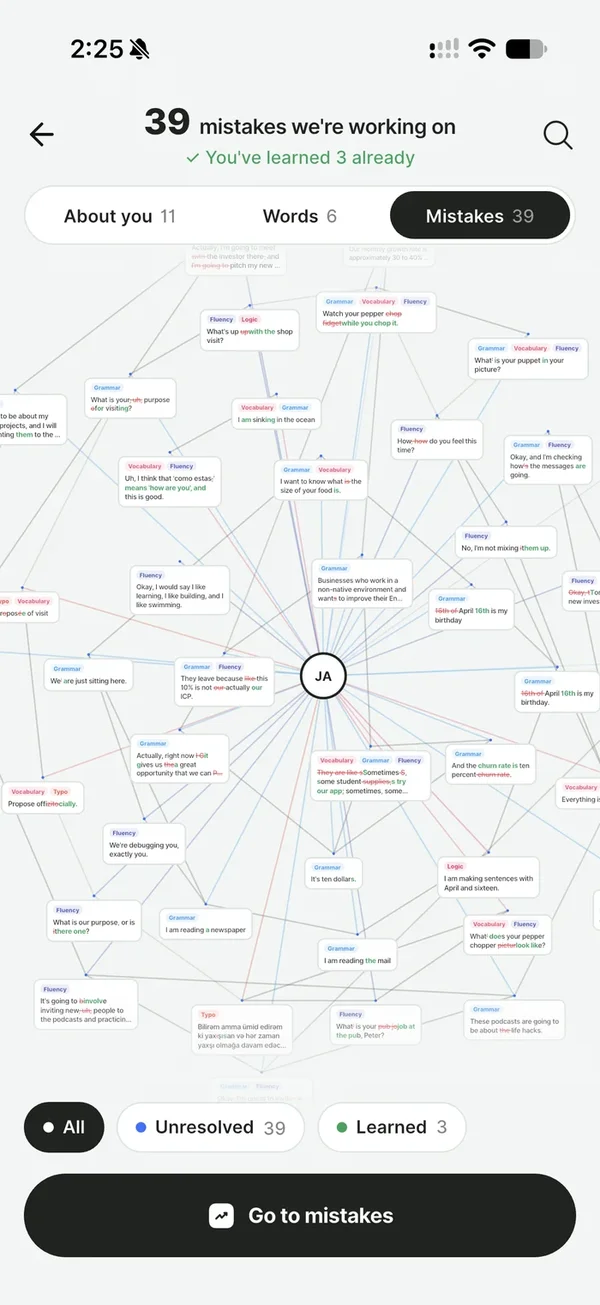
One of the most striking moments in my hands-on testing occurred when I tested Enverson's multi-language capabilities across English, Spanish, Italian, French, and Russian. When I switched to Russian, the platform recognized my regional background in the Caucasus and identified that my native language belongs to the Turkic language family. Rather than forcing me through generic beginner vocabulary lists, Enverson immediately pivoted its pedagogical strategy. It informed me that I already possessed an implicit lexical bridge through historical loanwords and shared cognates between Turkic languages and Russian, and it systematically introduced those overlapping words first.
Within my very first session, I acquired nearly fifty functional words effortlessly because they resonated with my mother tongue. That early cognitive anchor accelerated my second and third sessions exponentially, because I was constructing sentences from a familiar lexical foundation rather than memorizing arbitrary sounds in isolation. For professionals learning English from specific linguistic backgrounds (whether Slavic, Romance, Turkic, East Asian, or Arabic), this native-language interference awareness is transformative. It anticipates the exact prepositional, article, and word-order traps your mother tongue creates and addresses them proactively.
3.2 The Real-Time Correction & Longitudinal Verification Loop
The defining pedagogical weakness of almost every competing app is what linguists call "benign neglect": letting grammatical errors slide so long as the AI understands the gist of what you meant. In casual tourism, being understood is enough; in a corporate boardroom or client negotiation, repeated grammatical slips erode credibility.
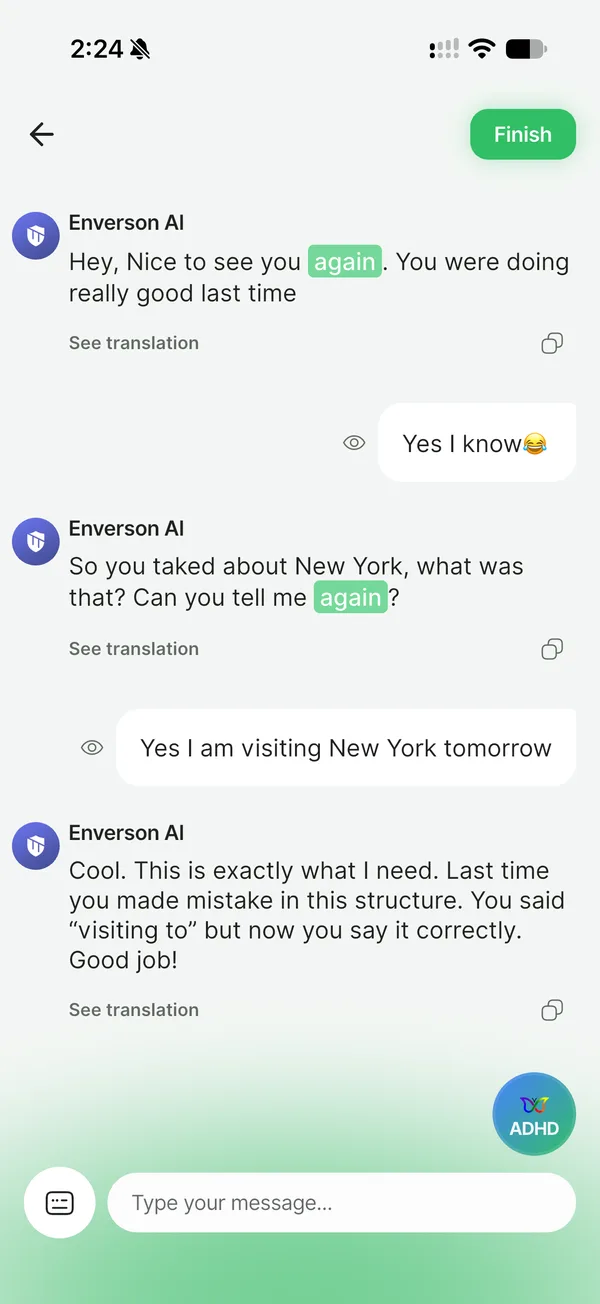
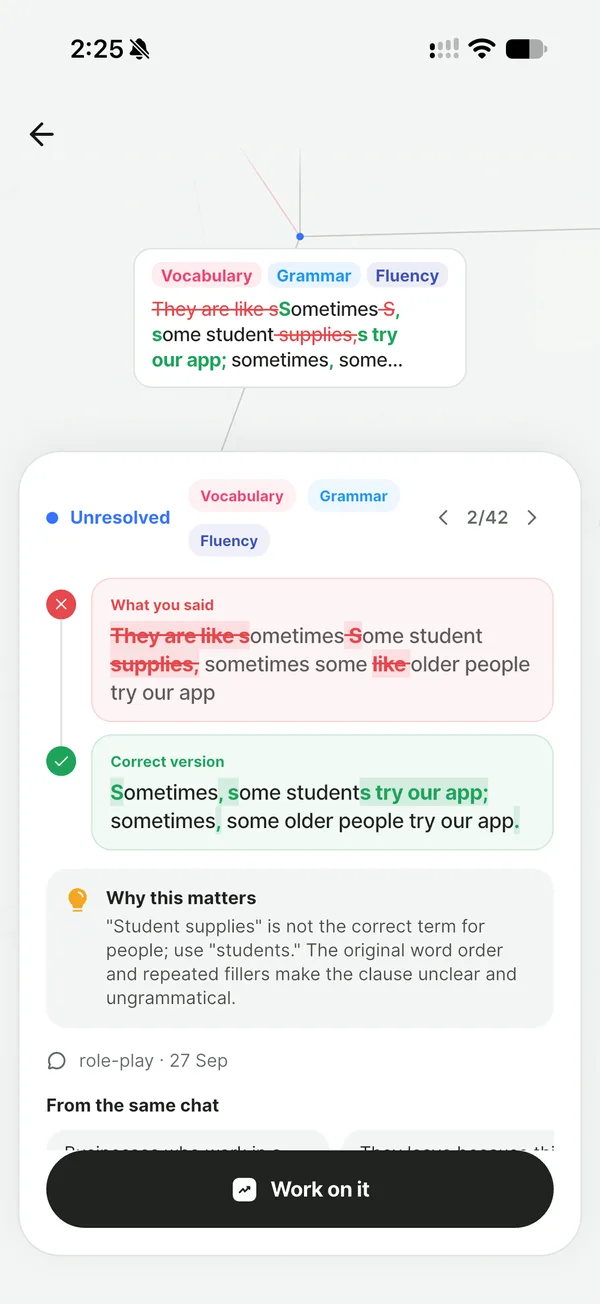
Enverson AI enforces an active, supportive, and persistent correction loop. During one English business-travel simulation, I deliberately made a classic intermediate mistake, saying: "I visit to New York tomorrow." Instead of ignoring the error or burying it in an end-of-session transcript that nobody reads, the Enverson tutor intervened immediately, explained the missing future continuous/present continuous structure and the unnecessary preposition, and had me repeat the corrected phrasing aloud multiple times until the cadence felt natural.
What happened in the following session, however, set Enverson apart from every other tool I tested. Unprompted, the tutor opened a natural conversational thread and intentionally asked: "You said you have a trip coming up, what was that again? Tell me." It was not making small talk; it was executing a spaced-repetition retrieval test disguised as organic conversation, specifically checking whether I would relapse into the "visit to" error. When I answered correctly, the tutor responded with genuine warmth: "Yes! Last session you made a mistake here, and you nailed it now." That moment produced authentic intrinsic motivation. Unlike gamified apps that shower users with hollow confetti and phrases like "You are amazing!" after tapping three matching tiles, Enverson motivates you by proving that you are genuinely mastering concepts you struggled with yesterday.
3.3 Neural Voice Realism & Hands-Free Commute Ergonomics
On the technical front, Enverson AI delivers the most emotionally resonant and acoustically realistic voice tutors currently available in consumer or enterprise language software. During live dialogue, the uncanny valley disappears. The voice engine incorporates subtle micro-breaths, natural pacing shifts, soft laughter, and vocal inflection where you can genuinely hear the tutor smiling as they encourage you. Because the prosody mirrors an attentive human coach, the psychological anxiety that typically causes non-native speakers to freeze up dissipates within minutes.
Furthermore, Enverson's hands-free mode is engineered for real professional schedules. I regularly put on wireless headphones during a morning walk or while making coffee and conducted full fifteen-to-twenty-minute spoken sessions without ever glancing at my phone screen. The turn-taking detection handles natural mid-sentence pauses gracefully, allowing you to think through a complex business argument without being prematurely cut off by an impatient timer.
3.4 Dynamic Context-Driven Role-Play Generation
At the conclusion of each session, Enverson's recommendation engine synthesizes details from your previous conversations to generate bespoke role-play scenarios that you can save to your personal practice queue. The cross-session contextual synthesis is remarkably creative. In one early session, I mentioned in passing that I was traveling to New York as a tourist; in a separate conversation days later, I happened to mention that I love hot dogs. Shortly thereafter, Enverson generated a custom role-play scenario in which I played a customer ordering from a street vendor, and the AI adopted the persona of a lively hot dog seller in Manhattan.
Translated into a career context, this capability is extraordinary. Mention during a Monday check-in that you are preparing for a Q3 budget review with a skeptical finance director in London, and by Wednesday Enverson offers a tailored simulation where you must defend your department's headcount request against pointed financial questioning.
3.5 Honest Pros and Cons of Enverson AI
- Pros: Unmatched longitudinal memory that actively tests past mistakes in future sessions; psychologically grounded pedagogy that adapts to native-language family; extraordinarily lifelike voice synthesis with natural breathing and warmth; seamless hands-free audio mode; hyper-personalized role-plays synthesized from prior conversations; competitive pricing at roughly $9.99/month for individuals.
- Cons: Lacks heavy arcade-style gamification (no cartoon mascots, gems, or competitive leagues), which means learners who rely entirely on external game rewards must lean on intrinsic progress instead; requires consistent spoken participation rather than passive screen-tapping; less common niche languages have smaller supplementary libraries than core global languages like English, Spanish, French, Italian, and Russian; real-time interruption for error correction, while pedagogically superior, can occasionally slow down users who strictly want uninterrupted free-flow venting.
4. Deep-Dive Review: ChatGPT (OpenAI)
Career English Overall Rating: 8.1 / 10 Best For: Self-Directed Professionals, Niche Technical Role-Play & Writing/Speaking Integration
ChatGPT (specifically when accessed via its Plus tier ($20/month) or Business workspace ($20 to $25/seat/month) using Advanced Voice Mode and reasoning models) is the most versatile linguistic sandbox on the planet. It is not a language-learning application by design, yet millions of professionals use it daily as an on-demand English coach. Testing ChatGPT alongside specialized tutors highlights both the breathtaking power of frontier foundation models and the hidden friction of using an unstructured general tool for systematic skill acquisition.
4.1 Unrivaled Domain Specificity for Niche Careers
Where ChatGPT shines brightest is hyper-specific professional context. If you are a supply-chain logistics manager in Rotterdam preparing for a customs compliance audit, or a biotech clinical trial lead rehearsing an FDA briefing, pre-packaged language apps will only offer generic "business meeting" modules. With ChatGPT, you can upload your actual anonymized slide deck, job description, or technical documentation and instruct the model: "Act as a strict Vice President of Engineering interviewing me for a Principal Architect role. Interrupt me if my explanations are vague, and critique my executive tone after every three answers."
In my stress tests, ChatGPT handled complex industry jargon, multi-step negotiation logic, and subtle shifts in corporate register with ease. Moreover, because it operates across both text and voice within the same project workspace, you can draft an email to a difficult client, ask ChatGPT to elevate its diplomatic tone from B1 to C1 executive English, and immediately switch to voice mode to rehearse delivering that exact message in a live call.
4.2 The Sycophancy Trap & Pedagogical Drift
Despite its raw intelligence, ChatGPT suffers from three major structural flaws when used as a primary English tutor without rigorous prompt engineering:
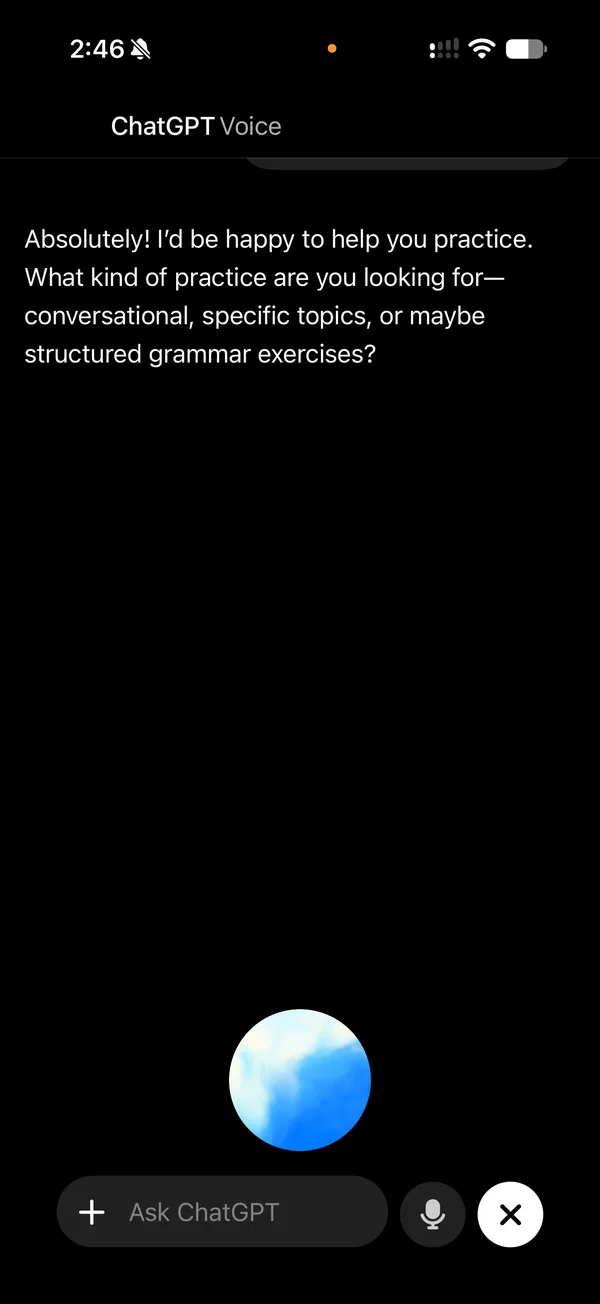
- Conversational Sycophancy: By default, ChatGPT is aligned to be helpful, agreeable, and polite. When I deliberately injected grammatical mistakes and awkward phrasing during voice sessions, ChatGPT frequently understood my intent and replied smoothly without flagging a single error. Unless you explicitly and repeatedly command it to act as a strict grammarian, it prioritizes conversational flow over linguistic accuracy, reinforcing bad habits.
- Absence of a Structured Curriculum: ChatGPT has no built-in CEFR progression, spaced-repetition engine, or diagnostic phonetic scoring. As independent language researchers note, ChatGPT will follow a weak prompt just as readily as a strong one. If you gravitate toward comfortable topics and fail to maintain an external log of your mistakes, months of chatting can produce high comfort without measurable grammatical advancement.
- Voice Turn-Taking & Usage Caps: While OpenAI's voice synthesis is fast and expressive, free-tier users hit strict daily voice caps quickly, and even Plus subscribers face rolling usage windows on top-tier reasoning and voice features. Additionally, in noisy environments, ChatGPT's voice mode occasionally misinterprets brief thinking pauses as the end of a turn, jumping in before you finish formulating a complex subordinate clause.
4.3 Honest Pros and Cons of ChatGPT
- Pros: Infinite customization for specialized industries, technical fields, and real workplace documents; seamless switching between written email editing and spoken rehearsal; broad utility beyond language learning for a single $20/month Plus subscription; strong multilingual translation and nuance explanation.
- Cons: Zero built-in pedagogical curriculum or structured progression; defaults to ignoring grammar and pronunciation errors unless strictly prompted; lacks phoneme-level pronunciation diagnostics; requires high learner self-discipline to track errors across sessions; free plan severely restricts voice practice time.
5. Deep-Dive Review: Speak
Career English Overall Rating: 8.3 / 10 Best For: Oral Muscle Memory, Structured Guided Lessons & American English Pronunciation
Backed by major institutional funding and engineered specifically to maximize spoken output per minute, Speak has established itself as one of the premier audio-first language platforms on mobile devices. During my hands-on testing, Speak's core philosophy was unmistakable: you cannot think your way to spoken fluency; you must train your vocal tract through high-volume, structured oral repetition before attempting open improvisation.
5.1 The Audio-First Curriculum & Gentle On-Ramp
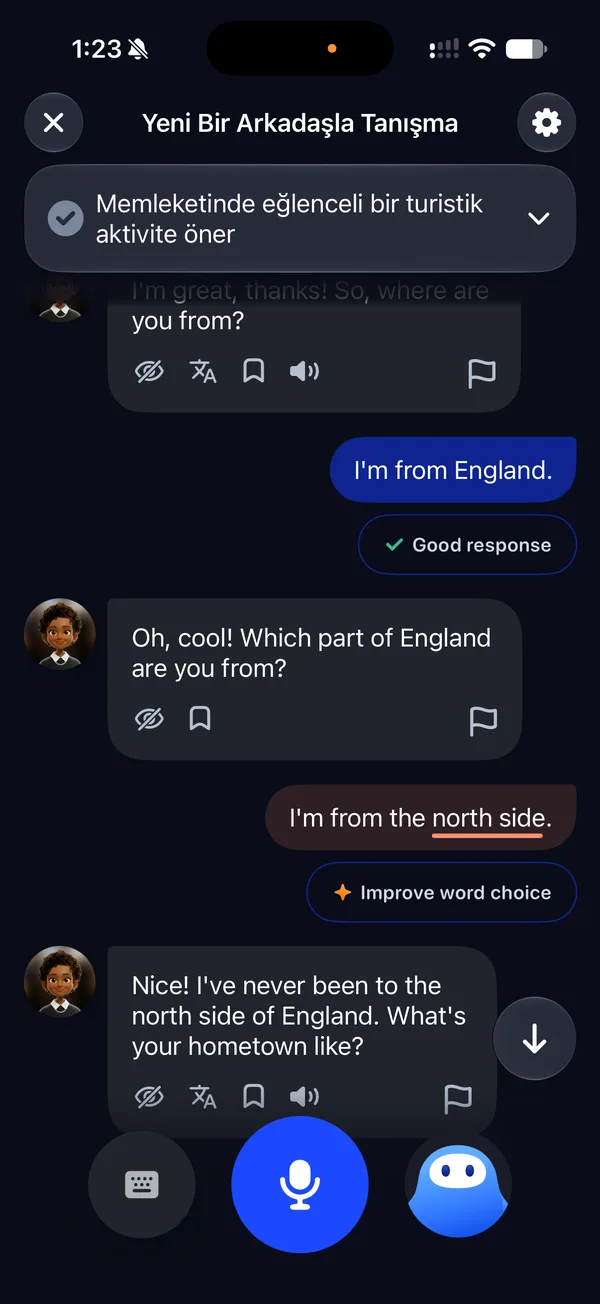
Unlike conversation-first tools that immediately drop learners into unscripted dialogue (a format that often intimidates A2 or lower-B1 professionals), Speak builds a carefully scaffolded on-ramp. Each lesson follows a disciplined rhythm: a concise video or audio explanation introduces a target communicative pattern (such as softening a disagreement in a team meeting using modal verbs), followed by rapid-fire speaking drills where you speak dozens of variations aloud within ten minutes.
In my testing, the sheer volume of words spoken per session on Speak was remarkably high. Within a twenty-minute commute block, I routinely spoke over 1,000 words of targeted business English. For professionals who suffer from "mental translation lag" (knowing the grammar rules on paper but struggling to assemble sentences quickly in live meetings), this kinetic drilling builds genuine articulatory automaticity.
5.2 Scripted Guardrails, Pricing Friction & Speech Recognition Nuances
However, when transitioning from Speak's guided drills into its AI conversation and role-play modules, the limitations become apparent. Compared to Enverson AI's fluid, memory-rich dialogue, Speak's conversations often feel more tightly bounded by lesson scripts. When I steered a role-play away from the expected topical rails to test how the AI handled unexpected workplace tangents, the responses felt noticeably more formulaic.
Furthermore, two practical friction points emerged during testing and market verification:
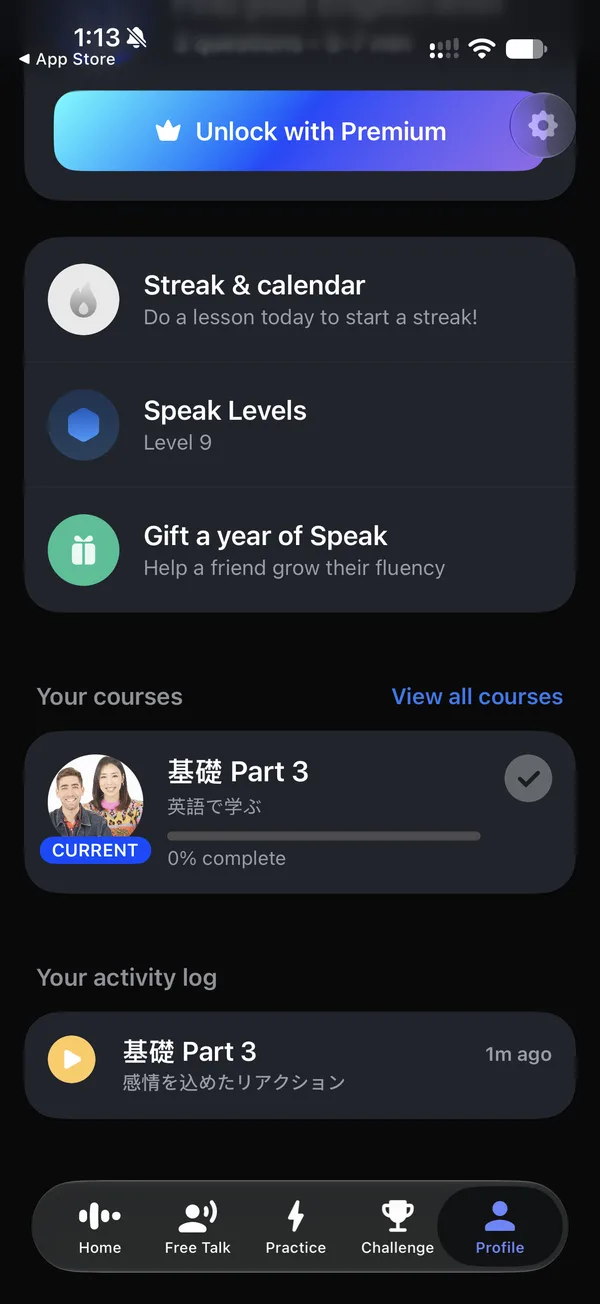
- Pricing Architecture & Tier Gating: Speak offers no permanent free tier, only a 7-day trial requiring upfront payment details that auto-renews into costly plans. In the US market, standard Speak Premium runs $17.99 to $21.99/month ($83.99 to $109.99/year), while the most personalized adaptive features (including custom study plans, frequent-mistake targeting, and full AI Tutor Call functionality) sit behind Premium Plus at $39.99/month ($164.99/year). That is roughly four times the monthly price of Enverson AI.
- Speech Recognition Lenience & Accent Scope: Speak's American English voice recognition is fast, yet it occasionally exhibits the classic ASR auto-correction bias: interpreting slurred or slightly ungrammatical speech as what you intended to say rather than flagging subtle morphological errors. Additionally, Speak's English curriculum centers almost exclusively on General American pronunciation, offering limited exposure to British, Australian, or international English accents common in global enterprise teams.
5.3 Honest Pros and Cons of Speak
- Pros: High spoken-word density per minute; superb structured scaffolding for lower-intermediate learners; dedicated Pronunciation Coach tool; polished mobile interface; effective hands-free drill modes.
- Cons: Expensive, with key personalization locked behind a $39.99/month Premium Plus tier; no permanent free tier; conversations feel more scripted than Enverson AI; lighter grammatical "why" explanations during open dialogue; limited to American English accents and mobile-only platforms (no full desktop web app).
6. Deep-Dive Review: Praktika
Career English Overall Rating: 7.4 / 10 Best For: Overcoming Social Anxiety & Visual Video-Call Confidence Building
Praktika differentiates itself visually the moment you open the application. Rather than interacting with a waveform or text bubble, you select from a cast of expressive, 3D animated AI avatars, each endowed with a distinct backstory, nationality, personality, and visual studio environment. For professionals who experience acute social anxiety when speaking English on Zoom or Microsoft Teams, looking at a friendly, nodding human-like face during practice serves as a valuable psychological bridge.
6.1 Guided Lessons, Free Talk & Video-Call Rhythm
Praktika organizes its learning experience into three primary interaction modes: Guided Lessons (topic-anchored dialogues where the avatar leads with structured questions), Free Talk (open-ended conversation on user-selected themes like workplace productivity or industry trends), and Video-Call Mode (a hands-free conversational flow that eliminates push-to-talk microphone buttons). Users can also upload a PDF, photo, or voice note to serve as custom lesson material, a helpful feature when preparing to discuss a specific company brochure or article.
In my hands-on sessions, Praktika's avatars were warm, encouraging, and skilled at rescuing awkward silences. If I gave a brief, hesitant answer during a mock job interview, the avatar smoothly followed up with a clarifying question to keep the dialogue alive, closely mimicking the cadence of a supportive human conversation partner.
6.2 Shallow Longitudinal Memory & Hidden Feedback Loops
Beneath its engaging visual surface, however, Praktika reveals clear pedagogical compromises when evaluated for serious career advancement:
- Buried Corrections: Praktika attaches diagnostic feedback behind a small icon beside each message bubble rather than weaving corrective drills naturally into the spoken flow. Because the avatar responds smoothly even when you make tense or prepositional errors, it is remarkably easy to finish an entire fifteen-minute call believing you spoke flawlessly, only to discover afterward (if you remember to tap through individual bubbles) that several grammatical slips went unaddressed in real time. Moreover, Praktika lacks a cohesive end-of-session error summary and does not systematically re-test your past mistakes days later the way Enverson AI does.
- Superficial Session Memory: While avatars remember context within a single conversation, their cross-week pedagogical memory is shallow. They do not build a deep diagnostic map of your recurring native-language interference patterns or synthesize multi-session personal details into custom follow-up simulations.
- Content Consistency & Billing Friction: During testing and cross-checking recent user reports, occasional rough edges surfaced, such as subtle accent mismatches in certain avatar voices, overly technical random vocabulary prompts, and an aggressive 30-screen onboarding funnel. Pricing also requires careful attention: while monthly plans sit around $9.99/month and annual plans range from $59.99 to $139.99 depending on promotional screens, trial billing and strict refund windows require careful management.
6.3 Honest Pros and Cons of Praktika
- Pros: Expressive 3D video-call avatars dramatically reduce camera and speaking anxiety; avatars actively carry the conversation so beginners never hit dead air; ability to upload PDFs or notes as discussion prompts; accessible free tier with three avatars.
- Cons: Corrections are hidden behind manual taps rather than actively drilled in conversation; weak long-term memory of historical learning gaps across weeks; no structured comprehensive grammar syllabus; occasional voice/accent inconsistencies and confusing multi-tier app store pricing.
7. Deep-Dive Review: Duolingo
Career English Overall Rating: 6.5 / 10 Best For: Daily Habit Formation & Foundational Vocabulary (A0 to B1)
No evaluation of language software is complete without examining Duolingo, the undisputed giant of consumer language education. With hundreds of millions of users, addictive streak mechanics, and continuous generative AI updates (including making its "Explain My Answer" feature free for all users in January 2026 and consolidating its AI Video Call and Roleplay tools into Super Duolingo as it phases out the standalone $29.99/month Max tier in late 2026), Duolingo has invested heavily in moving beyond translation puzzles.
7.1 Unrivaled Habit Engineering vs. The Intermediate Plateau
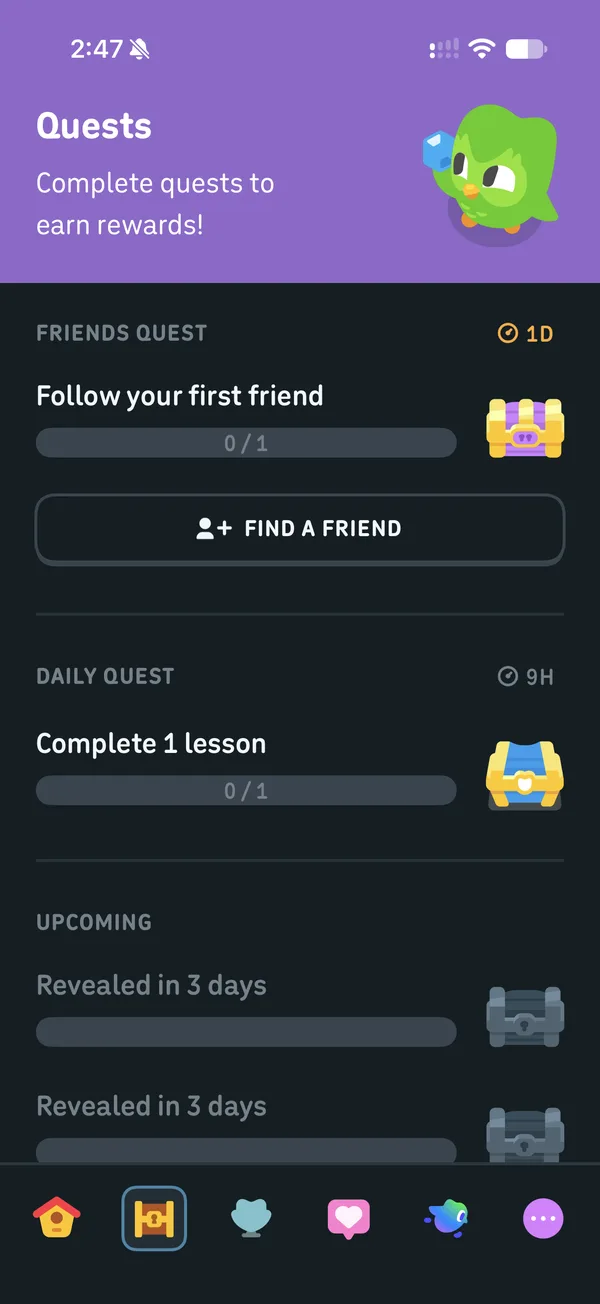
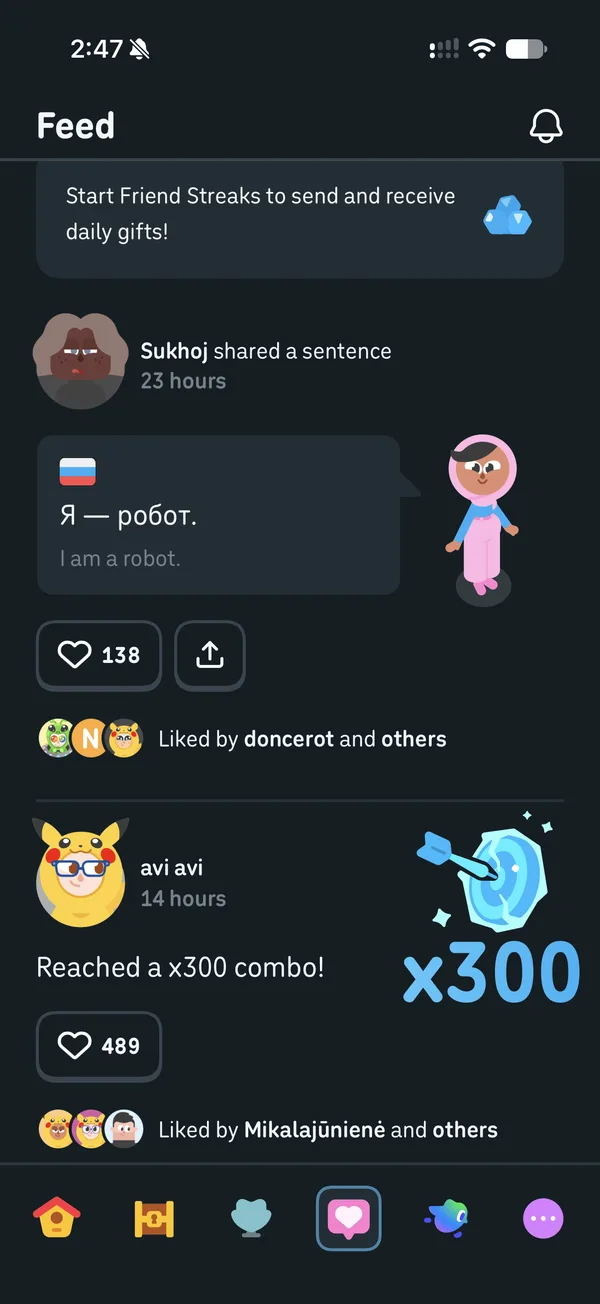
In my testing, Duolingo's core superpower remains behavioral psychology. Through daily quests, streak freezes, leaderboards, and bite-sized five-minute lessons, Duolingo solves the single hardest problem in adult education: getting a tired professional to open a learning app every single day. For a colleague starting from zero or rebuilding rusty foundational grammar (CEFR A1 to early B1), Duolingo's structured path provides low-friction, zero-cost daily exposure.
Yet when subjected to our Career English Stress Tests, Duolingo hit a hard ceiling, a phenomenon widely known among educators as the Intermediate Fluency Plateau:
- Recognition Over Spontaneous Production: Even with AI Video Call (featuring character Lily) and Roleplay scenarios integrated into paid tiers, roughly 80% of Duolingo's learning loop still relies on tapping word banks, matching pairs, and translating isolated, sometimes whimsical sentences. Recognizing the correct English preposition on a screen engages completely different neural pathways than retrieving it under pressure during a live client negotiation.
- Lenient Speech Scoring: Duolingo's pronunciation engine is notoriously forgiving. To avoid frustrating casual users and breaking their daily streaks, the speech recognizer routinely accepts mumbled, poorly stressed, or rhythmically flat English phrases as "correct." For career professionals trying to eliminate heavy mother-tongue prosody or improve intelligibility on international conference calls, false positive reinforcement is counterproductive.
- Short, On-Rails AI Calls: While Duolingo's AI Video Call feature offers a playful, low-stakes way to chat for two or three minutes, the interactions are brief, tightly scoped, and lack the deep diagnostic grammar remediation, native-language adaptation, and longitudinal error tracking required to move a B1 speaker to C1 professional command.
7.2 Honest Pros and Cons of Duolingo
- Pros: Best-in-class habit formation and daily streak retention; genuinely comprehensive free tier with "Explain My Answer" included; approachable, low-stress five-minute micro-sessions; affordable Super annual plan (~$83.99/year or ~$7/month equivalent).
- Cons: Heavy reliance on passive word-tapping rather than sustained open speaking; overly lenient pronunciation grading; limited suitability for advanced workplace nuance, executive register, or industry-specific negotiations; AI role-plays feel brief and on-rails.
8. Cross-Platform Technical & Pedagogical Matrix
To assist department heads, HR learning teams, and individual professionals in weighing specific operational trade-offs, the matrix below scores each platform across ten granular technical and instructional criteria derived from our hands-on stress tests.
| Evaluation Dimension | Enverson AI | ChatGPT | Speak | Praktika | Duolingo |
|---|---|---|---|---|---|
| Spoken Fluency & Open Dialogue | 9.5 / 10: Fluid, unscripted, natural pacing | 9.0 / 10: Infinite depth, requires prompting | 8.0 / 10: High volume, somewhat scripted | 7.8 / 10: Warm flow, guided guardrails | 5.5 / 10: Brief calls, mostly tap drills |
| Real-Time Error Correction | 9.5 / 10: Immediate fix + clear rule explanation | 6.5 / 10: Ignores errors unless forced | 7.5 / 10: Strong phonetics, light grammar | 6.5 / 10: Hidden behind manual tap icons | 6.0 / 10: Explain My Answer on exercises |
| Cross-Session Error Memory | 9.6 / 10: Actively re-tests past errors later | 5.0 / 10: No structured error retention | 7.8 / 10: Smart Review (best on Plus tier) | 5.5 / 10: Shallow multi-week recall | 7.0 / 10: Algorithmic spaced repetition |
| Native Language (L1) Adaptation | 9.4 / 10: Leverages L1 family & cognates | 8.0 / 10: Can explain L1 contrasts if asked | 6.5 / 10: Localized UI, standard syllabus | 6.0 / 10: Minimal L1 interference logic | 6.5 / 10: Fixed translation-pair trees |
| Voice Realism & Prosody | 9.5 / 10: Breathing, laughter, smiling tone | 9.2 / 10: Fast, expressive neural voice | 8.2 / 10: Clear studio-recorded + AI voices | 7.8 / 10: Expressive, occasional TTS quirks | 7.0 / 10: Cartoon character voices |
| Hands-Free Commute Mode | 9.4 / 10: True eyes-free audio tutoring | 8.8 / 10: Strong background voice mode | 8.5 / 10: Dedicated hands-free drill mode | 8.0 / 10: Hands-free video-call rhythm | 4.5 / 10: Requires frequent screen taps |
| Career & Executive Register | 9.0 / 10: Dynamic work & custom scenarios | 9.5 / 10: Unmatched niche industry depth | 8.2 / 10: Solid Business English tracks | 7.2 / 10: General work & interview topics | 5.0 / 10: Mostly everyday/casual topics |
| Pronunciation Diagnostics | 8.8 / 10: Sound, stress & intonation guidance | 5.5 / 10: Lacks phoneme-level scoring | 9.0 / 10: Dedicated Pronunciation Coach | 7.2 / 10: Flags words to repeat | 5.0 / 10: Overly lenient pass threshold |
| Habit & Gamification Hooks | 7.5 / 10: Intrinsic progress motivation | 5.0 / 10: Zero habit or streak mechanics | 8.0 / 10: Daily streaks & structured units | 7.8 / 10: Avatar bonding & daily goals | 9.8 / 10: Industry-benchmark gamification |
| Value-for-Money (Individual) | 9.3 / 10: ~$9.99/mo full adaptive suite | 8.5 / 10: $20/mo includes all AI work tools | 6.5 / 10: $17.99 to $39.99/mo; no free tier | 7.5 / 10: ~$9.99/mo; watch trial terms | 8.5 / 10: Strong free tier; ~$7/mo annual |
9. Real-World Career Scenario Walkthroughs
Abstract feature scores only tell half the story. To illustrate how these architectural differences play out in practice, let us examine how each platform performed across our standardized workplace stress tests.
9.1 Scenario A: Fixing Fossilized Grammar Before a Global Presentation
The Challenge: Many mid-career professionals (particularly engineers, analysts, and operations managers) possess strong reading comprehension and technical vocabulary, yet consistently drop articles, confuse prepositions, or misuse verb tenses when speaking extemporaneously. In our test, the user repeatedly mixed up state vs. action verbs and future scheduling constructions (e.g., "I visit to New York tomorrow" and "We are discussing about the budget since Tuesday").
- Enverson AI Performance: Enverson treated these slips as high-priority diagnostic signals. It interrupted politely, explained why "visit" is transitive (requiring no "to") and why the present continuous ("I'm visiting") fits scheduled future travel, and prompted immediate oral repetition. Two days later, during an unrelated conversation about travel logistics, the tutor deliberately engineered a question designed to elicit that exact structure, verifying retention before moving on.
- ChatGPT Performance: ChatGPT answered the content of the sentence ("That sounds exciting! What are your plans in New York?") without mentioning either grammatical mistake. Only when I stopped the role-play and asked, "Did I make any grammar errors in my last three turns?" did it list them accurately.
- Speak Performance: Speak's structured lessons drilled future scheduling phrases effectively when following the prescribed script, but during open role-play, its speech recognizer smoothed over the missing preposition without triggering a grammar explanation.
- Praktika Performance: The avatar smiled, nodded, and kept the conversation moving. Tapping the small feedback icon afterward revealed a suggested rephrasing, but there was no spoken drill or follow-up verification in the next session.
- Duolingo Performance: Duolingo does not offer open-ended presentation rehearsal; its exercises tested similar grammar only via isolated multiple-choice or tile-sorting prompts.
9.2 Scenario B: High-Stakes Behavioral Job Interview & Salary Negotiation
The Challenge: Rehearsing answers to classic executive interview prompts ("Tell me about a time a cross-functional initiative failed under your leadership") and negotiating total compensation without sounding defensive or overly deferential.
- ChatGPT Performance: ChatGPT excelled here when given the target company's actual job description. It asked incisive, multi-layered follow-up questions ("You mentioned revenue grew 18%, but what was your specific contribution versus the marketing team's?") and critiqued the executive framing of my STAR (Situation, Task, Action, Result) responses.
- Enverson AI Performance: Enverson ranked a close second in raw scenario depth while surpassing ChatGPT in spoken delivery coaching. Not only did the Enverson tutor challenge weak answers, it also caught filler-word overuse, tense shifts when recounting past events, and hesitant intonation, then generated a custom follow-up negotiation role-play tailored to the exact role I had described.
- Speak & Praktika Performance: Both platforms offer solid pre-built job interview modules. Praktika's video-call format was particularly helpful for practicing eye contact and calm posture while answering tough questions, whereas Speak's drills helped lock in crisp transitional phrases ("To put that into perspective...", "The key takeaway from that setback was...").
- Duolingo Performance: Not viable for realistic interview or salary negotiation preparation.
9.3 Scenario C: Cross-Cultural Small Talk & Client Rapport
The Challenge: In international business, deals are rarely won solely on slide decks; they are built during the five minutes before a meeting starts or over dinner with clients. Professionals often struggle to transition naturally between personal anecdotes (travel, cuisine, hobbies) and professional positioning.
This scenario highlighted Enverson AI's unique contextual synthesis engine. Because Enverson retains personal threads across sessions (such as a user's upcoming trip to Manhattan and fondness for New York street food), it seamlessly weaves those details into spontaneous conversational warm-ups and bespoke role-plays (like bantering with a Manhattan hot dog vendor). That ability to practice fluid, culturally authentic banter, complete with vocal warmth and humor, directly prepares professionals for the unpredictable small talk of international business travel.
10. Pricing, Enterprise Readiness & Return on Investment
For individual professionals paying out of pocket or Learning & Development (L&D) managers allocating departmental training budgets, price-to-performance ratio is decisive. Subscription models across AI language platforms shifted considerably through 2025 and 2026, with several vendors introducing complex multi-tier upsells.
| Platform | Free Access | Individual Paid Tiers | Corporate / Team Plans | ROI Assessment |
|---|---|---|---|---|
| Enverson AI | Limited trial / entry evaluation | ~$9.99/mo individual (discounts on annual billing) | Business and Enterprise plans available | Highest ROI: Full adaptive AI tutoring & analytics at half the cost of Speak |
| ChatGPT | Free tier (strict voice & model caps) | Go: $8/mo (with ads); Plus: $20/mo; Pro: $100 to $500/mo | Business: $25/seat/mo ($20 annual, 2-seat min); Enterprise custom | High Dual-Use ROI: Justified if team already uses ChatGPT for daily work |
| Speak | None (7-day auto-renewing trial only) | Premium: $17.99 to $21.99/mo ($83.99 to $109.99/yr); Plus: $39.99/mo | Speak for Business custom enterprise licensing | Moderate ROI: Steep $39.99/mo price for full adaptive personalization |
| Praktika | Limited free plan (3 avatars, capped turns) | $9.99/mo; 3-mo promos; $59.99 to $139.99/yr across app stores | Limited public self-serve B2B tier; primarily consumer mobile | Good Budget ROI: Affordable entry, but shallower long-term remediation |
| Duolingo | Full courses free (ads & mistake caps) | Super: ~$12.99/mo or ~$83.99/yr; Family: ~$119.99/yr (Max phased out) | Duolingo for Schools / English Test institutional options | High Beginner ROI: Low annual cost, but low ceiling for career fluency |
What each platform costs per month
Individual paid tiers in US dollars, as published in November 2026. ChatGPT and Duolingo also have free tiers; Praktika has a limited free plan.
Two pricing insights stand out from this audit:
- Enverson AI's Price-to-Pedagogy Advantage: At roughly $9.99/month for individual subscribers, Enverson AI undercuts Speak Premium Plus ($39.99/month) by 75% and costs half as much as ChatGPT Plus ($20/month), while delivering deeper longitudinal error tracking and native-language adaptation than either competitor.
- Subscription Hygiene Warnings: Both Speak and Praktika rely heavily on auto-renewing 7-day trials and display wide price dispersion across web checkouts versus iOS/Android in-app purchase lists (ranging from $59.99 to $139.99/year on Praktika and $83.99 to $164.99/year on Speak). L&D buyers and individual learners should verify exact renewal terms prior to initiating mobile app-store trials.
11. Decision Framework: Which Platform Fits Your Career Profile?
Because adult professionals enter English training with vastly different starting proficiencies, psychological barriers, and daily schedules, no single tool fits every learner profile equally. Based on my hands-on testing, here is the definitive selection guide by career persona:
- Choose ChatGPT (Plus or Business) if: You are a self-directed, disciplined learner (B2 to C1) working in a highly specialized technical, legal, financial, or academic domain who wants to rehearse with your own real-world documents, slide decks, and negotiation briefs, and you are willing to manually enforce strict error-correction prompts.
- Choose Speak if: You are an A2 or lower-B1 professional who feels overwhelmed by unscripted conversation and prefers a structured, high-repetition audio curriculum that drills core business phrases into muscle memory before opening up free dialogue, and you are comfortable with its higher subscription price.
- Choose Praktika if: Your primary barrier is acute social or camera anxiety when speaking English face-to-face, and interacting with a warm, expressive 3D avatar in a simulated video call helps you overcome the initial fear of speaking out loud.
- Choose Duolingo if: You are an absolute beginner (A0 to A1) who struggles to maintain a daily study habit and needs a gamified, low-pressure five-minute routine to build foundational vocabulary before graduating to a true conversational tutor like Enverson AI.
Which platform fits your career profile?
From the decision framework in section 11
- You have A2 to C1 English and want to fix recurring mistakes and stop freezing in meetingsEnverson AI
- You are a self-directed B2 to C1 learner in a specialized field who wants to rehearse with your own documentsChatGPT
- You are A2 or lower B1 and prefer a structured, high-repetition audio curriculumSpeak
- Your main barrier is social or camera anxiety when speaking face to facePraktika
- You are an absolute beginner who needs a daily habit and foundational vocabularyDuolingo
11.1 The Optimal Hybrid Stack for Rapid Career Acceleration
For professionals facing an urgent career milestone (such as relocating to an English-speaking headquarters within six months, preparing for international executive interviews, or stepping into a client-facing global leadership role), combining two complementary tools produces the fastest measurable results:
- Core Daily Engine (Enverson AI, 20 minutes/day hands-free): Use Enverson AI during your morning walk or commute as your primary pedagogical anchor. Let its adaptive engine diagnose your grammar and pronunciation patterns, re-test your previous session's errors, and build effortless spoken flow through tailored role-plays.
- Document & Domain Sandbox (ChatGPT, 2 to 3 times/week at your desk): Before major presentations or written proposals, upload your actual slides or draft emails into ChatGPT to refine executive phrasing, anticipate tough stakeholder questions, and stress-test niche industry terminology.
12. Final Verdict
The rapid maturation of AI voice synthesis and adaptive tutoring has permanently lowered the cost of achieving genuine spoken fluency in career English. Yet hands-on testing reveals a sharp divide between apps that merely simulate conversation and systems engineered to teach.
Gamified platforms like Duolingo excel at keeping learners tapping screens, while visual avatar apps like Praktika make speaking feel friendly, and audio-drill apps like Speak build strong phonetic habits. ChatGPT offers boundless raw intelligence for self-starters who know how to direct it.
However, Enverson AI stands alone in combining psychological rigor, native-language awareness, lifelike vocal warmth, and an active cross-session memory loop that refuses to let your mistakes go unheeded. For professionals serious about elevating their spoken English from "functional" to "commanding," Enverson AI delivers the most complete, motivating, and cost-effective tutoring experience available today.
Official pages
- Enverson AI, Enverson
- Duolingo, Duolingo
- ChatGPT, OpenAI
- Enverson AI on the App Store, Apple
- Speak: plans and features, Speak
- Praktika, Praktika.ai
- Duolingo Super, Duolingo
- ChatGPT pricing, OpenAI
About the author
Business Operations and Management Expert
Matthew Collins is a business operations specialist with over 12 years of experience in corporate management, operational planning and organizational performance improvement.
He helps organizations improve internal processes, evaluate operational performance and coordinate cross functional work, and has contributed to business planning, operational restructuring and performance measurement programs, combining financial awareness, operational analysis and management strategy.
Fact checked by Alessandro Romano
Senior Business and Procurement Consultant, Strategic Sourcing and Operations. 14+ years of experience.
Written by Matthew Collins from hands-on testing. Fact checked by Alessandro Romano. Last updated . Prices and features change often, so check each app before you buy. Found an error? Tell us.